Cinema Vines
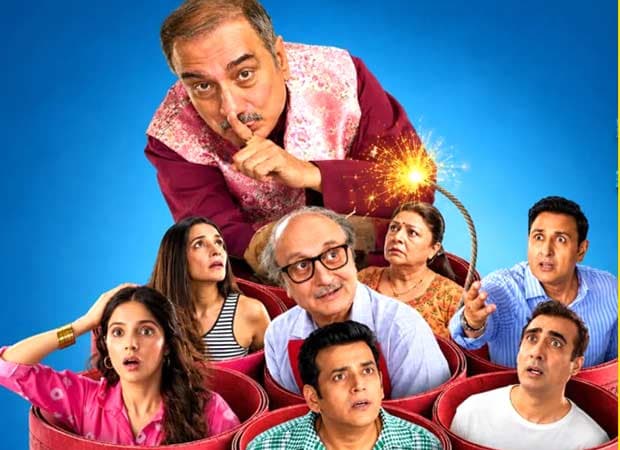
Last Friday marked the theatrical launch of Mirzapur The Movie, a film adaptation of the popular Amazon Prime Video series. The release opened to a robust ₹24.75 crore in India, positioning it among the biggest non‑star‑led openings in Bollywood history. The film’s first‑day earnings eclipsed recent sleeper hits such as Saiyaara (₹22 crore) and Awarapan 2 (₹21.5 crore). The cast features Pankaj Tripathi, Ali Fazal, Divyenndu, and Jitendra Kumar, with Ravi Kishan, Abhishek Banerjee, Rasika Dugal, Sheeba Chadha, Rajesh Tailang, Shriya Pilgaonkar, Harshita Shekhar Gaur, and Shweta Tripathi reprising roles from the original series.
In a surprising turn of events, the modest‑budget film Hanuman Ansh has outperformed major releases, including Toxic A Fairy Tale for Grown‑Ups. With a production cost of only ₹2 crore, the film began its run with a modest ₹10 lakh on opening day. By its 30th day, it had amassed ₹94 crore at the box office and is poised to cross the ₹100 crore mark by Sunday. The film’s momentum accelerated after three weeks, with a fourth‑week net collection of ₹28 crore in India. A notable 54% jump on Tuesday of its 26th week brought in ₹8.50 crore, surpassing Toxic, which earned ₹8.20 crore on the same day despite a wider release.
Filmmaker Anubhav Sinha, who transitioned from commercial action to socio‑political dramas, took to X (formerly Twitter) to commend both productions. He wrote, “Congratulations Team Mirzapur!!! Well done. The Box Office is telling us all a story if we watch carefully. Mirzapur and Hanuman Ansh are not freak hits. It is easy to draw simplistic conclusions and dangerous too.” Sinha’s observation underscores the unpredictable nature of current box‑office trends.
Both films illustrate a broader industry shift: audiences are increasingly receptive to content‑driven stories over star power. Mirzapur The Movie demonstrates that a strong narrative and ensemble cast can command significant opening day receipts, while Hanuman Ansh proves that low‑budget, grassroots productions can achieve blockbuster status through word‑of‑mouth and sustained growth. The unexpected success of these releases has sparked discussions about the evolving dynamics of Indian cinema and the potential for future projects that prioritize storytelling over traditional star vehicles.