 Cinema Vines
Paul Greengrass’s latest feature, The Uprising, takes the 1381 Peasants’ Revolt and turns it into a visceral, contemporary commentary on wealth inequality and the excesses of the privileged. The film opens with a sweeping drone shot over a bleak, dust‑laden England, then pulls into handheld close‑ups that keep the audience rooted in the mud, grime, and betrayals that define the period.
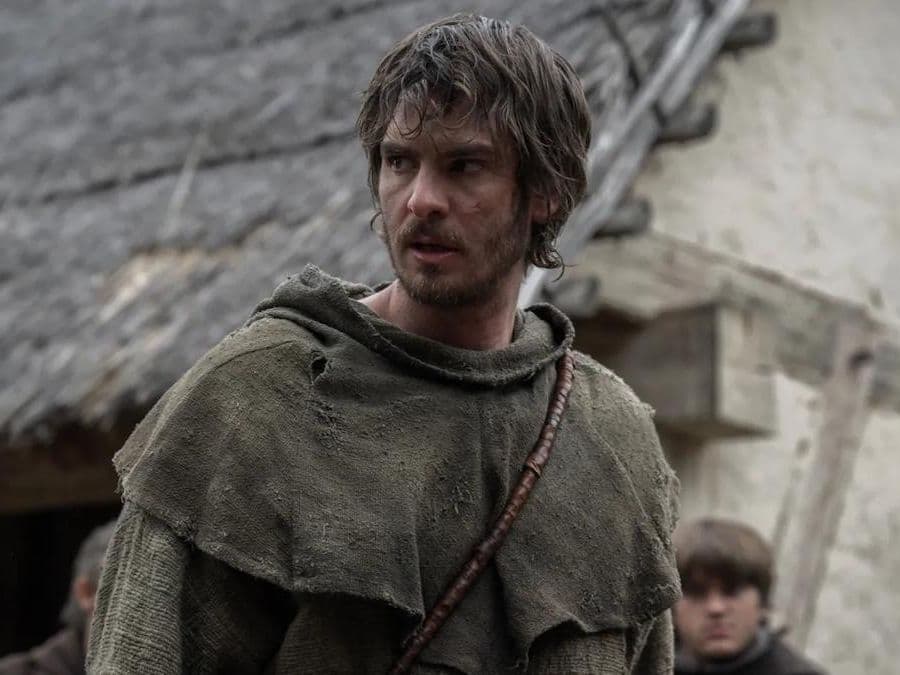
At the centre of the story is Ploughman, played by Andrew Garfield, a farmer who has lost his wife and two children to the Black Death. When the council, acting on the king’s behalf, raises taxes on the peasantry, Ploughman kills a soldier who demands a death tax for his family. His act ignites a chain reaction that brings together a motley crew of rebels, including priest John Ball (Jamie Bell), a progressive voice condemned by the church, and Wat Tyler (Cosmo Jarvis), a soldier who served under the king’s father. Together they lead a desperate, tightly staged rebellion that lays bare the human cost of the conflict.
Greengrass’s signature style—handheld camera work paired with sweeping aerial shots—keeps the viewer in the thick of the action, while the film’s palette of dull, dun colours presents an England far removed from the idyllic landscapes of William Blake’s poetry. Even the palace and nobility are rendered in muted tones, though queen mother Joan of Kent (Katherine Waterston) is highlighted by a delicate gold net that frames her hair. The supporting cast, including Jonny Lee Miller as the cunning mayor William Walworth and Tom Hollander as Sir Robert Hales, delivers performances that are both engaging and authentic.
Garfield’s portrayal of Ploughman is marked by a raw, emotional intensity that carries the character’s heartbreak and resilience. Bell brings a fiery zeal to John Ball, while Jarvis adds the weight of a seasoned soldier’s experience. The film’s narrative pace is brisk, mirroring the urgency of the rebels’ fight for survival and belief.
However, the film’s conclusion takes an unexpected turn. A brief epilogue introduces a Robin Hood–style figure, attempting to link the historical uprising to the legendary outlaw’s origins. The sudden shift feels jarring and disrupts the otherwise cohesive narrative, leaving audiences questioning the relevance of this cameo in the context of the 1381 revolt.